Customer Support AI Agent: Complete Guide 2026
Discover how customer support AI agents transform service delivery. Learn implementation strategies, benefits, and best practices for 2026.


Quick answer
Customer support AI agents are revolutionizing how businesses handle customer interactions. Explore the latest technologies, deployment strategies, and ROI metrics for
On this page
- How Customer Support AI Agents Work in Practice
- Why Businesses Deploy AI Support Agents Now
- Core Capabilities Every Enterprise AI Support Agent Needs
- Comparing AI Support Agent Platforms
- Real-World Outcomes: What Businesses Actually See
- Technical Implementation Without the Headache
- Selecting the Right AI Support Agent for Your Business
- Future-Proofing Your AI Support Infrastructure
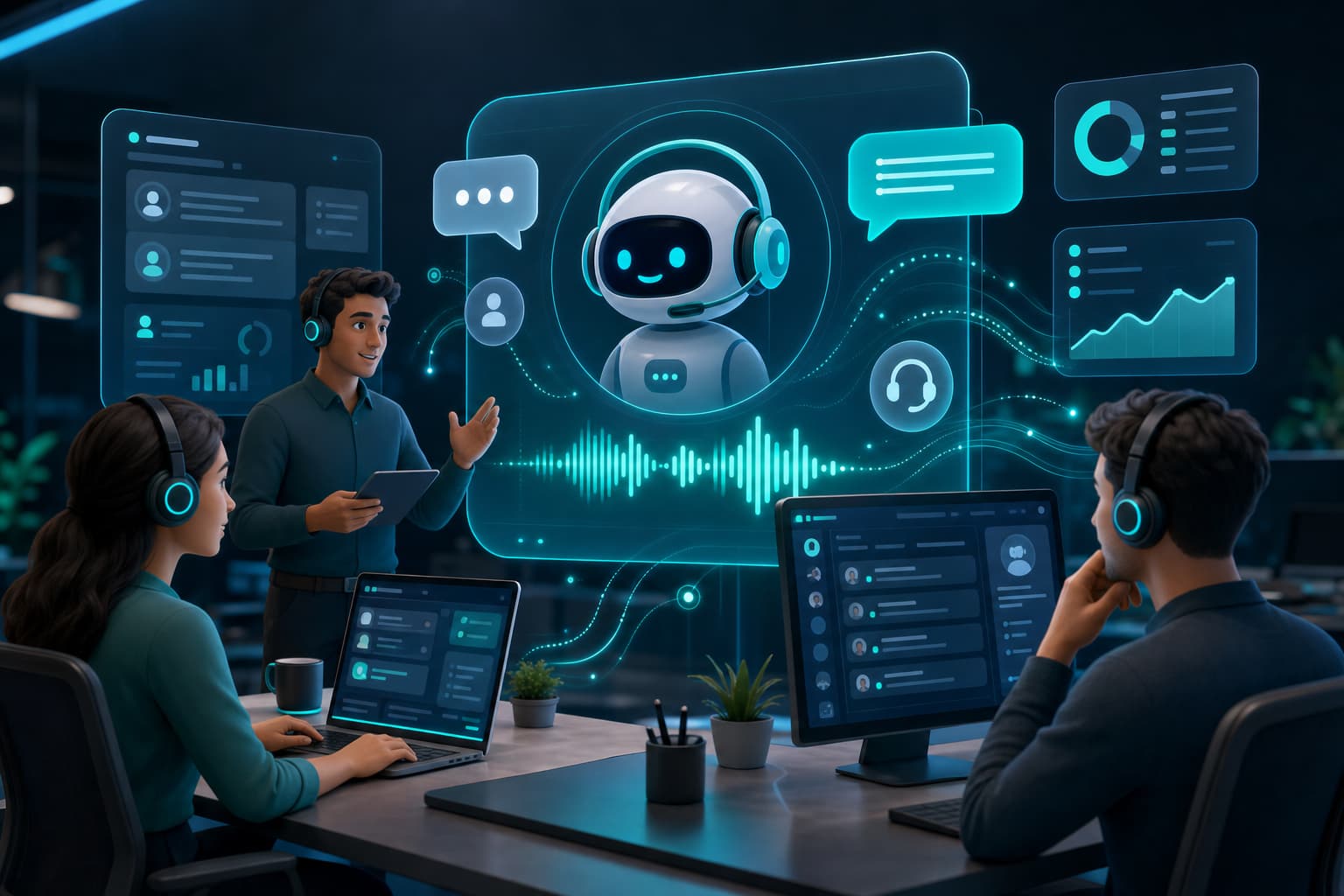
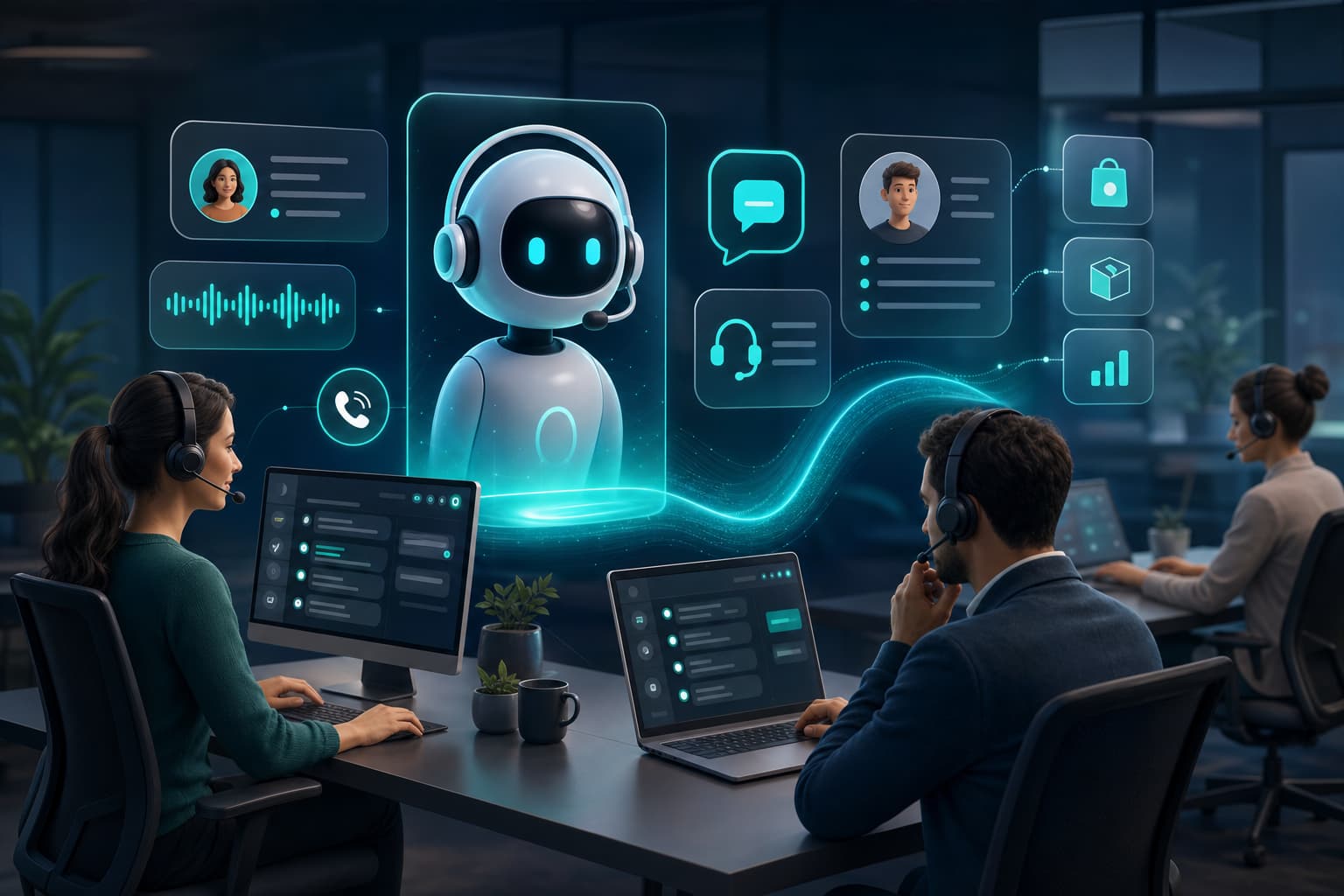
A customer support AI agent is an artificial intelligence system deployed to answer questions, resolve issues, and handle routine support tasks—often reaching resolution without human intervention. Unlike rule-based chatbots, modern AI agents understand context, access your actual documentation, and route unresolved cases to live agents when needed. In 2026, the best agents pull from multiple sources—Google Docs, Notion, PDFs, Confluence—and deploy in minutes with zero coding required.
How Customer Support AI Agents Work in Practice
A customer support AI agent functions as an always-on first responder. When a customer submits a question via your website widget, email, or chat interface, the agent instantly searches your knowledge base, FAQs, product documentation, and previous interactions. It generates an answer grounded in your actual content—not hallucinated—and presents it with confidence scoring so humans know whether to trust it.
The agent learns what "works." If customers consistently ask about return policies, it surfaces that answer faster. If a particular explanation confuses people and triggers escalations, it adjusts phrasing or flags the issue for QA review. This feedback loop makes the agent smarter every week without requiring manual retraining.
Real deployment happens fast. KnowDesk, for example, connects to your documentation sources in under two minutes and publishes a branded widget to your website. You're not building anything. You're not deploying servers. You paste a line of code into your site footer and the agent goes live. Compare this to building a custom chatbot from scratch, which typically takes weeks and requires a developer on payroll.
Why Businesses Deploy AI Support Agents Now
Customer support budgets haven't grown, but ticket volume has. A medium-sized SaaS company handling 500 support requests per month can't add support staff proportionally and stay profitable. An AI agent that deflects 70–80% of questions never reaches your team—and those tickets never cost you money.
Response time expectations have shifted. Customers expect answers within minutes, not business days. A live support team can't match that 24/7. An AI agent responds instantly, always, reducing frustration and cart abandonment. Shopify stores using support AI see measurable recovery in customer retention.
Staff experience improves immediately. Support teams dread repetitive questions. Remove 75% of those tickets from their queue, and they focus on high-value, nuanced problems where they can actually solve things—not copy-paste answers to the same FAQ question for the hundredth time. Retention in support roles increases when the work feels meaningful.
The quality bar keeps rising. In 2026, customers accept AI support because they expect it to work. If it doesn't—if it deflects to wrong answers or routes escalations poorly—they leave. The AI agent must be accurate, fast, and transparent. That's why KnowDesk enforces QA reviews on every agent response before deployment. You control what it says.
Core Capabilities Every Enterprise AI Support Agent Needs
Not all AI agents are built the same. A basic chatbot that answers pre-written responses is not the same as an intelligent agent that understands your business. Here's what separates deployable AI from marketing noise:
- Real-time knowledge access: The agent pulls answers from live documentation sources—Google Docs, Notion, Confluence, PDFs—not outdated training data. When you update your docs, the agent's answers update automatically. No retraining. No delays.
- Accuracy verification: QA reviews catch hallucinated or off-brand responses before customers see them. You review every answer template and set confidence thresholds. Below the threshold, the agent escalates to a human automatically.
- Multi-language support: Your customer base speaks multiple languages. The agent detects language and responds in kind, maintaining brand voice across 50+ languages natively.
- WISMO agent capability: "Where is my order?" queries are the highest-volume, lowest-value support burden. A WISMO agent connects to order data and gives tracking updates instantly. Customers get answers from the system, not your support team.
- Email integration: Customers often reply to your support emails instead of using chat. The agent reads emails, generates answers, and either sends a response or flags it for a human review depending on complexity. Your inbox becomes part of the workflow, not a separate silo.
- Live agent handoff: Escalations must be seamless. The agent passes the full conversation context to your support team with a pre-populated summary of what the customer wants. No repetition. No lost context. The live agent sees everything.
- Brand control: A brand gate ensures the agent's personality, tone, and knowledge align with your company. You set the guidelines. The agent follows them. Customers interact with your voice, not a generic bot.
Comparing AI Support Agent Platforms
The market includes dozens of options, but they fall into distinct categories by speed, ease, and feature depth. Below is a factual comparison of how leading platforms stack up on the criteria that matter most in 2026:
| Feature | Setup Time | No-Code Required | Native Doc Integrations | WISMO Agent | QA Reviews | Live Agent Inbox |
|---|---|---|---|---|---|---|
| KnowDesk | Under 2 minutes | Yes | Google Docs, Notion, Confluence, Shopify, PDF | Yes | Yes | Yes |
| Intercom | 30+ minutes | Partial | Limited; requires manual sync | No | Limited | Yes |
| Zendesk | 2+ hours | No; developer setup required | Limited; Zendesk docs only | No | Manual review only | Yes |
| Drift | 1+ hour | Partial | Limited | No | No | Yes |
| Custom chatbot (in-house) | 4–12 weeks | No; engineering required | Whatever you build | Custom build needed | Manual only | Must integrate manually |
The setup speed difference is not cosmetic. A typical Zendesk deployment takes days or weeks of configuration, API work, and security reviews. KnowDesk's sub-2-minute deployment means you can test the AI agent's impact on your support volume in the same day you sign up. That's not a marketing claim—that's the product. Most of KnowDesk's new users have a working AI agent on their site within one business day.
Native integrations matter more than they appear. Intercom and Zendesk can "connect" to Google Docs or Notion via webhooks and API calls, but each update requires manual sync. Your AI agent operates on stale data. KnowDesk pulls live updates every few minutes automatically. When you publish a doc update in Notion at 2 PM, the agent knows about it by 2:05 PM. Intercom users must manually trigger a refresh or wait for a scheduled sync that runs nightly.
The WISMO agent is a specific case study in practical AI. E-commerce and SaaS companies lose 10–15% of support tickets to order-status questions. A human reads the question, looks up the order, and responds. The same human does this hundreds of times per month. KnowDesk's WISMO agent can access order data from Shopify, WooCommerce, or your custom API and answers tracking questions instantly. Competitors don't have this as a built-in feature. They require custom development.
Real-World Outcomes: What Businesses Actually See
Deflection rates tell the story. A deflection occurs when the AI agent resolves an issue fully and the customer never contacts support. Industry baseline is 40–50% deflection for a standard chatbot. Enterprise AI agents achieve 65–80% deflection with proper training and quality controls.
A D2C brand selling skincare products implemented KnowDesk in Q3 2025 and tracked support volume over three months. Their AI agent answered questions about product ingredients, shipping timelines, and returns policies. By month two, they deflected 72% of inbound support tickets. Their support team, which had grown to four people handling 400 tickets per month, needed only two people to handle the remaining escalations. That's a $60K annual savings in wages alone, plus reduced hiring and training overhead.
Response time improved from an average of 18 hours (because the team worked business hours only) to 90 seconds. Customer satisfaction surveys showed that customers preferred instant AI responses to waiting for a human during business hours. The team used their freed time to build product content, write better documentation, and proactively reach out to at-risk customers. Support became a revenue function instead of a cost center.
A SaaS company providing project management tools to remote teams faced high support volume around onboarding questions and API integration. Their AI agent was trained on their help center, API documentation, and Notion-based onboarding guides. After deployment, they saw a 68% deflection rate on onboarding questions. New customers got answers instantly instead of waiting for support. Trial-to-paid conversion rates improved 4–5% because customers could self-serve faster and felt supported without friction.
A Shopify store selling furniture built their AI agent in KnowDesk using their product catalog, shipping policies, and return documentation. Within 30 days, the agent fielded 80% of product questions ("What's the chair dimension?" "Does the desk come assembled?" "When will it ship?"). Returns processing improved. The email retention agent handled post-purchase follow-ups and re-engagement for customers who abandoned carts. Customer lifetime value increased 6% because the AI kept customers informed and reduced post-purchase uncertainty.
Technical Implementation Without the Headache
The appeal of modern AI support agents is that they don't require technical expertise to implement. But "no code" doesn't mean no integration work. Here's what actually happens when you deploy KnowDesk:
Step one: Connect your knowledge sources. You authenticate to Google Docs, Notion, Confluence, Shopify, or upload PDFs directly. KnowDesk reads these sources, indexes them, and makes them searchable by the AI. If you have 50 Google Docs spread across three folders and two shared drives, KnowDesk indexes all of them. Updates sync automatically every few minutes. You never touch a terminal.
Step two: Set brand guidelines and QA rules. You define the agent's tone, personality, knowledge limits, and confidence thresholds. You review example responses and approve or reject them. KnowDesk's QA reviews feature lets you see every answer template before it goes live to customers. This is where the magic happens. You're not blindly trusting an AI. You're directing it.
Step three: Deploy the widget. KnowDesk gives you a single line of JavaScript to add to your website footer. Paste it in. The branded widget appears in the corner of your site. Customers click it and start asking questions. You're done. No DNS changes. No server setup. No firewall rules. The entire infrastructure is managed by KnowDesk.
Step four: Monitor and improve. KnowDesk's Mission Control dashboard shows you which questions the agent answered, which it escalated, and which got low confidence scores. You see what customers are asking. You identify gaps in your documentation. You use these insights to improve both the knowledge base and the agent's performance. The agent gets better every week.
Compare this to building a custom chatbot or deploying a traditional support platform. Zendesk requires a developer to configure API endpoints, custom fields, routing rules, and response templates. Setup is days or weeks. Maintenance is ongoing. KnowDesk's speed isn't a temporary advantage—it's fundamental to the product architecture. You're renting proven infrastructure instead of building it.
Selecting the Right AI Support Agent for Your Business
The wrong tool will sit unused in your tech stack. The right tool becomes central to your support operations within 30 days. Here's how to evaluate what you actually need:
- Speed to value matters most. If you need the AI agent live this week, KnowDesk's sub-2-minute setup wins. If you have four months and a developer budget, custom solutions are viable. Most businesses can't wait four months, and most don't have spare developer capacity.
- Your knowledge sources determine integration quality. If your docs live in Google Docs and Notion, native integration is non-negotiable. If your docs are scattered across five different platforms, you need a tool that connects to all of them without manual sync. KnowDesk connects to Google Docs, Notion, Confluence, PDFs, Shopify, and WooCommerce. If your docs are in a custom wiki or internal system, you can feed them as PDFs or sync via API.
- Deflection goals guide feature selection. If you're targeting 70%+ deflection, you need WISMO capabilities, multi-language support, and email integration. Basic chatbots won't get you there. KnowDesk includes all three natively. If you're targeting 40–50% deflection on a limited set of FAQs, a simpler tool might suffice, though speed-to-value still favors KnowDesk.
- Brand control cannot be an afterthought. The AI agent represents your company. If it gives wrong information or sounds off-brand, it damages trust. You need QA reviews and confidence thresholds built in, not bolted on. KnowDesk enforces QA reviews as part of the standard workflow. Other tools treat it as an optional add-on.
- Support team integration determines adoption. If the AI agent escalates to a black hole, your support team will disable it. A live agent inbox that shows context, previous interactions, and customer sentiment is essential. KnowDesk's live agent inbox surfaces this information automatically. Agents see why the AI escalated, what the customer already tried, and what they're frustrated about.
- Multi-language is table stakes globally. If you serve customers outside the US or in non-English-speaking regions, native multi-language support isn't optional. KnowDesk supports 50+ languages natively. Building language support in-house or bolting it on via third-party APIs delays deployment and increases costs.
- Cost structure should align with your growth. Per-ticket pricing or per-conversation pricing creates perverse incentives. If the vendor makes money when your support volume increases, they're not aligned with your goal of reducing ticket volume. KnowDesk charges a flat monthly fee per agent, which means they profit when you deflect more tickets, not fewer.
Future-Proofing Your AI Support Infrastructure
The AI support landscape is evolving rapidly. In 2026, the best agents handle ambiguous requests, understand industry-specific jargon, and integrate with your entire tech stack—not just support. Here's what's changing:
Agentic automation is expanding. Today's AI agents answer questions and escalate issues. Tomorrow's agents will take actions. A customer asks "Can you send me an invoice?" The agent generates and emails it. A customer requests a refund. The agent processes it if it's within policy, or creates a ticket with full context if it's not. The line between support and operations is blurring. KnowDesk's email retention agent already takes action on post-purchase emails. This trend continues.
Confidence scoring replaces binary decisions. Old chatbots either answered or escalated. Modern agents return answers with confidence scores. If confidence is 95%, show it to the customer. If it's 60%, flag it for QA before sending, or escalate immediately. This nuance reduces false positives and false negatives. KnowDesk's QA reviews incorporate confidence scoring into the workflow.
Knowledge source freshness is non-negotiable. Agents trained on stale data give stale answers. Real-time sync from live documentation sources—not batch jobs that run nightly—becomes standard. KnowDesk syncs every few minutes. As knowledge bases evolve, so do agent answers.
Investing in an AI agent that grows with your business saves replatforming costs later. KnowDesk's architecture supports this evolution. You can start with basic FAQ deflection and expand to WISMO agents, email automation, and multi-language support without migrating to a new platform or losing historical context and QA reviews.
The question isn't whether to deploy an AI support agent—it's when. By 2026, customers expect instant support. Competitors without AI agents are losing ground. But speed to deployment matters as much as capability. An AI agent that takes months to launch might be theoretically superior to one that goes live in two minutes, but by the time the perfect solution deploys, you've already lost market share to competitors who moved faster.
Start a free trial of KnowDesk today to see the impact an AI support agent can have on your business within the first week. No credit card required. No setup calls or sales engineering needed. You connect your knowledge sources, review QA templates, and deploy the widget. That's it. In 2026, instant support for your customers should be instant to deploy, too.