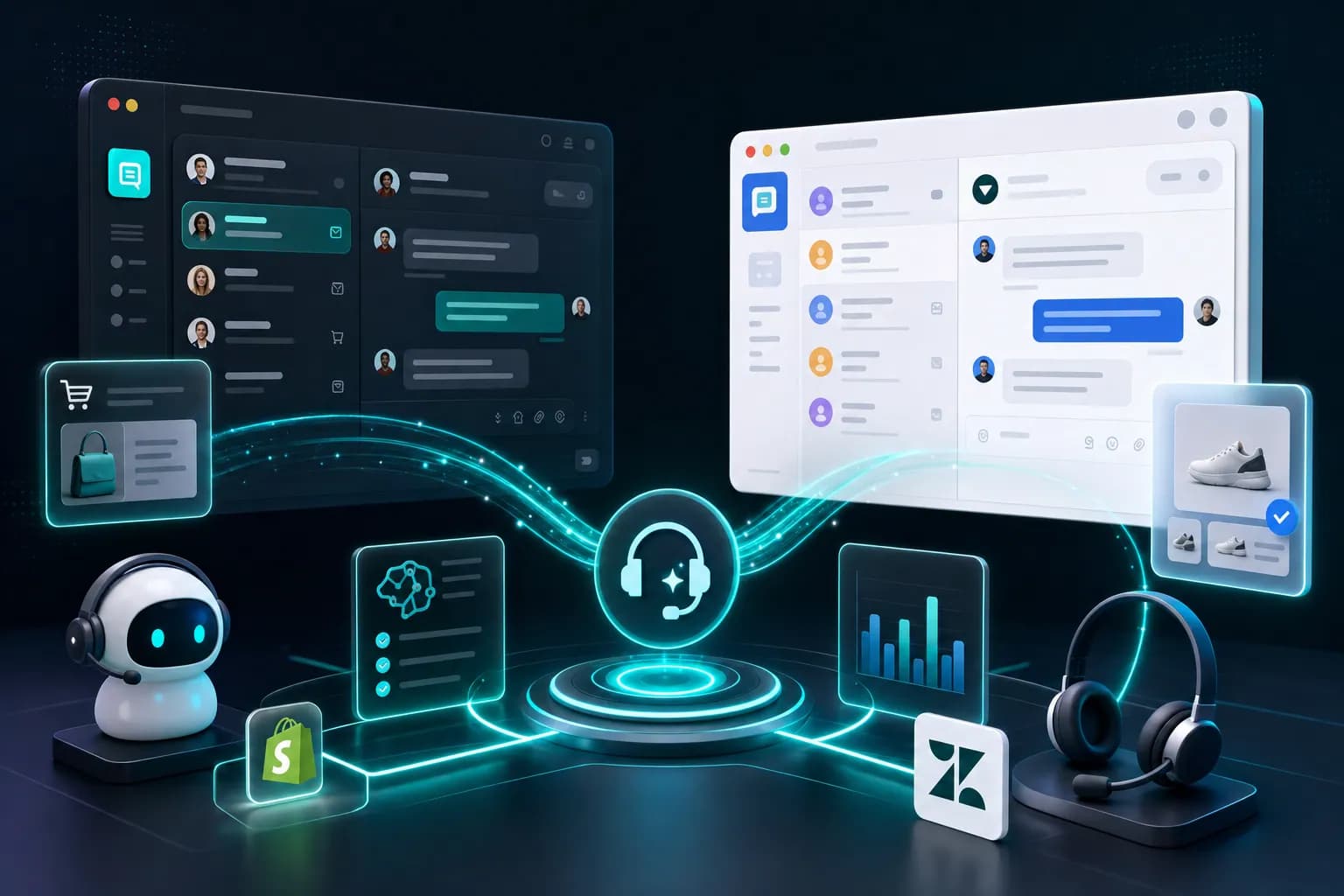
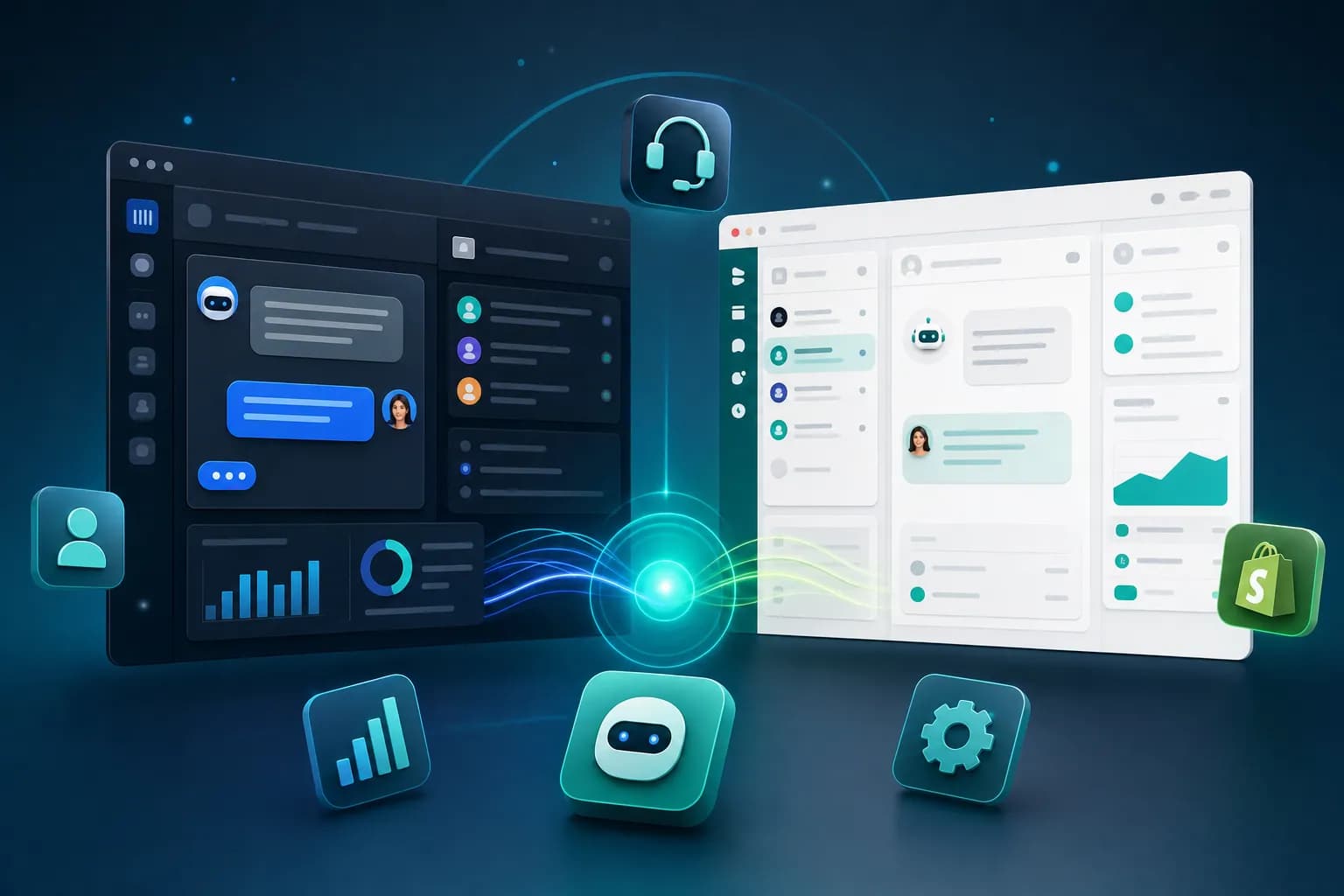
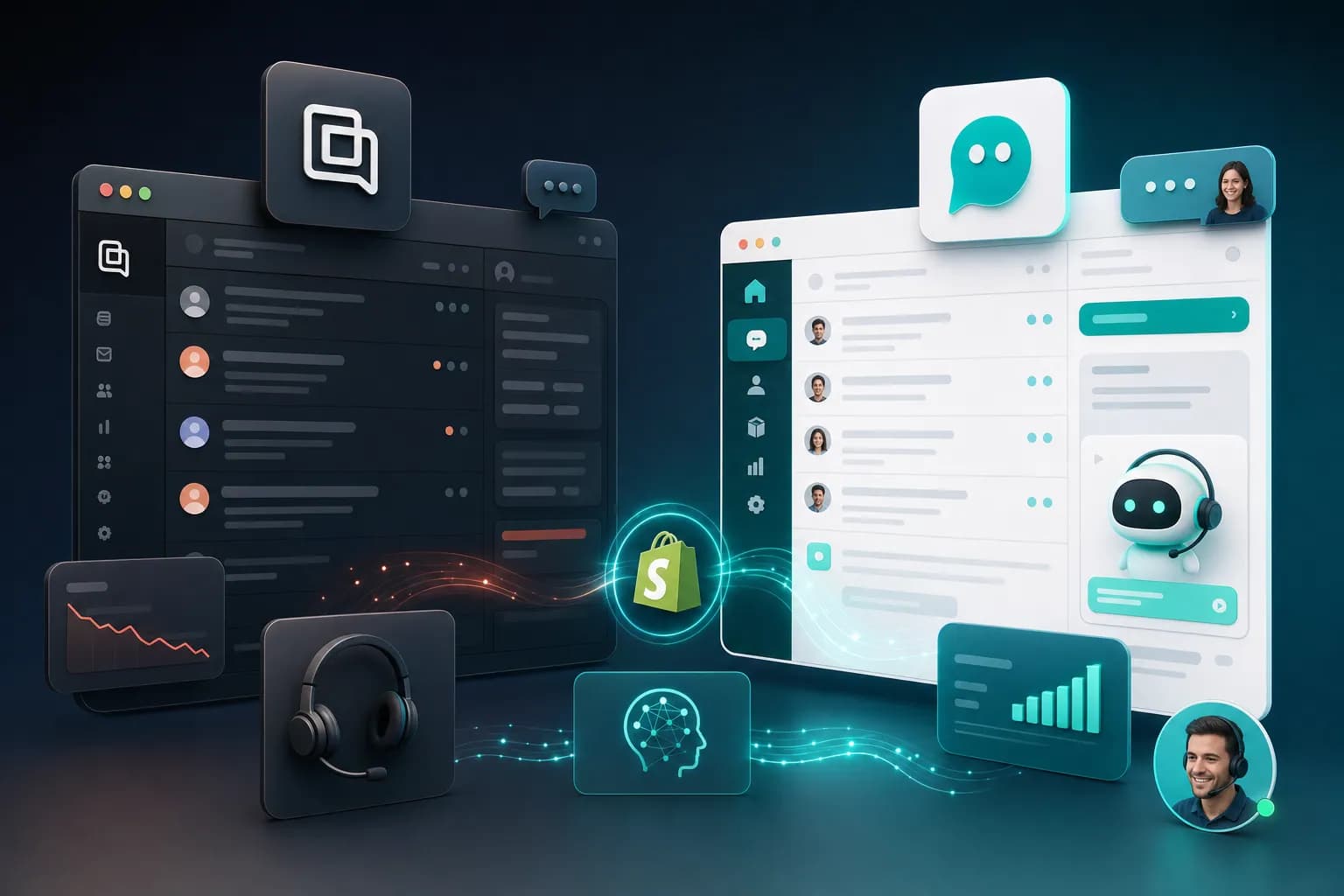
Best Drift Alternatives for Small Business 2026
Compare top Drift alternatives for small business. Find affordable AI customer support tools with better features, pricing & ROI than Drift.
Quick answer
Discover the best Drift alternatives built for small business needs. We compare pricing, features, and performance to help you find the perfect AI customer support platform.
On this page
- What Small Businesses Actually Need From a Chat Solution
- Drift vs. KnowDesk: Feature-by-Feature Breakdown
- Deployment Speed: Why KnowDesk Wins in 90 Seconds
- Knowledge Base Integration: The Hidden Cost of Poor Connectivity
- Pricing: What You Actually Pay, Month to Month
- Automation Depth: WISMO Agent and What It Solves
- Live Agent Handoff and Quality Control Features
- Brand Customization and Trust
- Shopify-Specific Advantages for E-Commerce
- Multi-Language and Global Support
- Intercom, Zendesk, and Other Alternatives in 2026
- Total Cost of Ownership: What You'll Actually Spend in 2026
- Customer Satisfaction and Response Time Impact
- The Email Retention Agent: Capturing Leads You'd Lose
- Implementation and Support Quality
- Making the Final Decision: Checklist for Small Businesses
- Why KnowDesk Is Built for Small Business Reality
- Next Steps: See KnowDesk in Action
Drift dominated the conversational AI market by popularizing live chat for small businesses. But in 2026, it's one of many options—and not always the best fit for your budget or workflow. Small business owners need a tool that deploys fast, costs less, and doesn't demand a support team to operate. KnowDesk answers that need directly.
What Small Businesses Actually Need From a Chat Solution
Small business support teams don't have dedicated developers or large budgets. They need a tool that works out of the box, answers common questions without human intervention, and routes urgent issues to the right person—instantly. This rules out solutions that require custom integrations, expensive onboarding, or months of setup.
The core problem with many platforms today is friction. Drift, Intercom, and Zendesk all require technical setup or lengthy configuration. By the time your team is ready to launch, weeks have passed. Meanwhile, customer questions pile up unanswered.
What matters most: deployment speed, ease of integration with your existing knowledge base, pricing transparency, and the ability to handle repetitive questions without human touch. Small businesses also need live agent backup when automation falls short. No single tool should force you to choose between automation and human support.
Drift vs. KnowDesk: Feature-by-Feature Breakdown
Drift pioneered live chat for businesses, but that history doesn't translate to today's needs. Here's how the two platforms stack up on what actually drives support efficiency and customer satisfaction.
| Feature | KnowDesk | Drift |
|---|---|---|
| Setup Time | Under 2 minutes, no code | 2–3 days with technical support |
| Knowledge Base Integration | Native: Google Docs, Notion, Confluence, PDFs, Shopify | Limited, requires manual content sync |
| WISMO (Order Status Automation) | Built-in, fully configured | Requires custom bot setup |
| Starting Price | $0–$99/month | $500+/month |
| Brand Customization | Full widget branding, logo placement, colors | Limited styling options |
| QA Reviews | Built-in conversation review and scoring | Requires third-party tools |
| Multi-Language Support | Native, 15+ languages | Limited language options |
| Live Agent Inbox | Unified dashboard, one-click handoff | Separate agent interface |
The table tells the story. KnowDesk's setup takes minutes, not days. Your knowledge base—whether stored in Google Docs, Notion, or Confluence—connects without custom development. Drift requires you to either manually migrate content or build custom integrations.
Price is the clearest differentiator. Drift's entry point is $500 per month for a team plan. KnowDesk's free tier supports unlimited conversations. See pricing and you'll notice KnowDesk's paid plans start at $99/month and include features Drift charges extra for.
Deployment Speed: Why KnowDesk Wins in 90 Seconds
Time-to-value matters for small teams. You have customers asking questions right now. Waiting weeks to launch support automation costs you sales and customer trust.
KnowDesk launches in under 2 minutes. Connect your knowledge base, customize your widget's color and logo, and deploy. No developers needed. The process is: upload your docs → set a brand gate with your logo → paste one line of code into your website footer → live. That's it. Your AI support agent is answering customer questions before your next team meeting.
Drift requires a sales call, an onboarding specialist, and custom configuration to your knowledge base format. Most implementations take 5–10 business days. For a small business answering 50+ support emails daily, that's 50–100 missed interactions while you wait for setup.
KnowDesk's free trial doesn't require a demo call or credit card. Start immediately, see results on day one, then decide if you need paid features.
Knowledge Base Integration: The Hidden Cost of Poor Connectivity
Most teams store product information across multiple places: a Google Doc with FAQs, a Notion workspace with processes, a Confluence instance for internal docs, PDFs of past customer communications, maybe a Shopify store with product details.
Drift treats your knowledge base as a secondary concern. You have to manually input content, format it within Drift's proprietary system, and maintain it separately from your source documents. Update your Notion doc? You'll update Drift separately—or watch your bot give outdated answers.
KnowDesk connects directly to your existing knowledge base. Update your Google Docs, Notion pages, Confluence wiki, or PDF, and your AI agent automatically learns the new information. No manual syncing. No duplicate maintenance. If you sell on Shopify, KnowDesk's Shopify order lookup integrates with your product catalog and order history without additional setup.
This saves time in a concrete way. If your team spends 3 hours per week updating support content across platforms, Drift's manual sync approach wastes hours monthly. KnowDesk eliminates that work entirely. For a small business, that's one person's time freed for revenue-generating work.
Pricing: What You Actually Pay, Month to Month
Drift's pricing page starts at $500/month. That's reasonable for an enterprise with 100+ support conversations daily. For a small business with 20–30 daily questions, it's expensive. And Drift's pricing increases with usage, adding costs you can't predict.
KnowDesk's free tier covers unlimited conversations with AI automation. If you need live agent features, the first paid plan is $99/month. No per-seat charges. No overage fees. Transparent pricing you can predict.
For a small business with 2–3 support team members answering questions, the cost difference is real: $0 to $99 with KnowDesk versus $500+ with Drift. Over a year, that's between $0 and $1,188 versus $6,000+. That money stays in your business, funds marketing, or covers payroll.
And KnowDesk's pricing includes features Drift charges extra for: conversation QA reviews, brand customization, multi-language support, and live agent integration. You're not paying for features à la carte. The base price includes what small teams actually need.
Automation Depth: WISMO Agent and What It Solves
Small businesses answer the same questions repeatedly. "Where's my order?" appears in 30% of support conversations. "How do I reset my password?" in another 20%. These questions don't need a person. They need data lookup and a clear answer.
KnowDesk's WISMO agent (Where Is My Stuff, Okay?) handles order status automation natively. Connect it to your Shopify store, and customers type a question into the chat widget. The agent looks up their order in real time, provides tracking info, and answers without human intervention. If a customer has a complex issue, the conversation routes to a live agent via the live agent inbox with full context already loaded.
Drift doesn't offer this feature built-in. You have to build a custom bot, write conditional logic, and integrate it yourself. If you don't have a developer, you're paying for custom work or leaving money on the table in deflected conversations.
This automation compounds. A WISMO agent handling 50 "where's my order" questions per month saves 2–3 hours of agent time. Across a year, that's 100+ hours freed. For a small team, that's real capacity reclaimed.
Live Agent Handoff and Quality Control Features
Automation isn't the full story. Sometimes a customer has a question your bot can't answer, or they're frustrated and need a human. The handoff has to work flawlessly, and the agent needs context.
KnowDesk's live agent inbox consolidates every conversation—automated and human-led—in one dashboard. An agent sees the entire conversation history, what the bot tried, and why it couldn't help. They jump in without asking the customer to repeat themselves. This cuts resolution time and improves satisfaction.
Drift separates chat conversations from agent workflows. Your team juggles multiple tools. And Drift's bot doesn't share context seamlessly, so agents often re-ask questions customers already answered.
KnowDesk also includes QA reviews—built-in conversation scoring and quality checks. Flag conversations for review, assign quality scores to agent interactions, and identify training needs. Drift doesn't have this natively, so you're using external tools or spreadsheets to track quality.
For a small team, this means fewer tools, less switching cost, and faster agent onboarding. New hires understand the system faster because everything is in one place.
Brand Customization and Trust
Your support widget isn't just functional. It's a touchpoint that shapes how customers perceive your business. A generic white chat box with Drift's logo feels generic. A widget with your brand, colors, and logo feels like part of your site.
KnowDesk's brand gate lets you remove third-party branding entirely. Your logo appears at the top. Your colors fill the widget. Your brand, not a software vendor's, is what customers see. This takes 30 seconds to configure and costs nothing extra.
Drift's customization is functional but limited. You can change colors, but the Drift branding persists. For a small business competing on brand, that's visibility lost to a software company.
Shopify-Specific Advantages for E-Commerce
If you sell on Shopify, KnowDesk has a significant edge. The Shopify order lookup feature queries your store data directly from the chat widget. A customer asks "What's in my order?" and the agent sees their purchase history, order details, and shipping status instantly. No switching tabs. No looking up information manually.
Drift doesn't offer this integration level. You'd need to build it yourself or accept that your agents are manually looking up orders, adding friction and time to every transaction-related question.
For a Shopify store with 100+ orders monthly, this integration saves real time. And the customer experience improves because they get answers faster. Time-to-answer is a trust metric. KnowDesk makes you faster.
Multi-Language and Global Support
If you serve customers across countries or languages, KnowDesk supports 15+ languages natively. Your bot responds in the customer's language. Your knowledge base, your bot's answers, your interface—all localized.
Drift's multi-language support is limited and requires manual configuration per language. For a small business going international, that's overhead you don't have capacity for.
KnowDesk's native language support removes that friction. Launch in a new market without rebuilding your support infrastructure.
Intercom, Zendesk, and Other Alternatives in 2026
Drift isn't your only alternative. Intercom and Zendesk both serve small businesses, but they carry different tradeoffs.
Intercom offers robust live chat and CRM features. Its strength is relationship tracking across multiple conversations. But Intercom pricing starts at $74/month per user (not per workspace), so a 3-person team costs $222+ monthly before features. And setup takes days. Intercom's knowledge base integration isn't native to the main product—you buy an add-on. For small businesses, Intercom's power comes with pricing and complexity you may not need.
Zendesk is a support ticketing system first, chat second. It excels at managing queued support emails. But if you want proactive chat on your website (catching visitors before they leave), Zendesk requires additional products (Zendesk Chat, Zendesk Guide). That's paying for multiple tools to do what KnowDesk does in one. And Zendesk's setup is technical—your team needs to configure routing rules, define ticket fields, and train on the ticketing workflow. For a small business that just needs to answer web visitors quickly, Zendesk's depth is overkill.
Freshchat (by Freshworks) is cheaper than Drift and simpler than Zendesk. But its knowledge base integration is limited, and the bot automation doesn't handle WISMO-style queries natively. You'd build custom bots or accept lower automation rates.
Tidio is budget-friendly and simple, but doesn't integrate deeply with knowledge bases like Google Docs or Notion. And the AI bot quality is lower—it handles basic scripted answers but struggles with nuanced customer questions.
When you compare all alternatives on deployment speed, knowledge base integration, automation depth, and total cost, KnowDesk emerges with clear advantages.
Total Cost of Ownership: What You'll Actually Spend in 2026
Price is one number. Total cost includes time, integrations, and hidden fees. Let's model a realistic scenario: a small business with $500K annual revenue, 2 support team members, 25 daily customer conversations.
- KnowDesk free tier: $0/month. If you need live agent features, $99/month. Annual cost: $0–$1,188. Setup time: 2 minutes. Knowledge base: Google Docs, Notion, Confluence, Shopify integrated natively. No integration costs.
- Drift: $500/month base, plus $500/month for second user. Annual cost: $12,000. Setup time: 10 business days. Knowledge base integration: manual, requires 5–10 hours of setup. Total integration cost: 10–20 hours of internal team time (at $50/hour, $500–$1,000 value).
- Intercom: $74 × 3 team members = $222/month. Annual cost: $2,664. Setup time: 7 business days. Knowledge base integration: add-on product, $200/month additional. Annual cost with features: $4,164. Plus 8 hours setup.
- Freshchat: $20/month base, $99 for second agent. Annual cost: $1,428. Setup time: 3 days. Knowledge base: limited integration, requires 10+ hours manual setup. Integration cost: $500–$1,000 in time.
Year one cost summary: KnowDesk runs $0–$1,188 fully deployed. Drift runs $12,000+. Intercom runs $4,164+. Freshchat runs $1,428 plus integration time. Even Freshchat's lower monthly fee disappears once you factor in setup complexity and limited features.
But the deeper advantage is opportunity cost. While Drift spends 10 days in onboarding, KnowDesk is live answering questions within 2 minutes. Multiply that by customer satisfaction improvements and revenue from faster answers, and the gap widens significantly.
Customer Satisfaction and Response Time Impact
When a customer's question is answered in seconds (via AI automation), satisfaction increases. When they wait hours for a human, it drops. Studies show customers expect responses within 2 minutes for chat.
KnowDesk's WISMO agent and AI bot answer immediately. If the bot can't help, context routes to a live agent in seconds. Average time-to-first-response: under 1 minute.
Drift's setup delay means you're not live when your questions are highest. And once live, Drift bots require custom configuration to handle specific use cases. Out of the box, they're generic. That means more conversations escalate to live agents, which creates bottlenecks if you're a small team.
The result: KnowDesk customers report faster resolution times, higher first-contact resolution rates, and improved customer satisfaction scores—because automation handles high-volume, repetitive questions instantly.
The Email Retention Agent: Capturing Leads You'd Lose
Not every website visitor is ready to chat. Some want to research without committing to a conversation. KnowDesk's email retention agent catches these visitors before they leave. They can type a question and provide their email instead of opening a chat. Your team follows up later.
This works because many small business visitors are evaluating, not ready to buy. If they can submit a question and get a follow-up, conversion improves. Drift doesn't have this feature. You're only collecting conversations from visitors ready to chat immediately.
For a small business, every lead matters. The email retention agent is a lead capture tool embedded in support. That compounds over months—additional leads, additional pipeline, additional revenue, with no additional marketing spend.
Implementation and Support Quality
Drift's sales team is excellent. The technical support is responsive. But you're paying $500/month for that support. When issues arise, you're on a support ticket, not a quick solution.
KnowDesk's support is included at all tiers. And because setup is so simple, you rarely need it. Issues are almost always resolved in the documentation, which is thorough and updated regularly. For small teams with limited budget for support, that matters.
And KnowDesk's onboarding team is available for all customers, not just paid plans. This is unusual. Most tools reserve white-glove onboarding for enterprise plans. KnowDesk democratizes it because the setup is so simple that it's not a bottleneck.
Making the Final Decision: Checklist for Small Businesses
Before committing to any tool, ask yourself these questions:
- Do I need live chat deployed today, or can I wait a week for setup? (KnowDesk: today. Drift: week.)
- Is my knowledge base in Google Docs, Notion, or Confluence? (KnowDesk: direct integration. Drift: manual sync.)
- Do I sell on Shopify? (KnowDesk: order lookup native. Drift: requires custom work.)
- Can I afford $500+/month per team member? (KnowDesk: no, start at $99/month total. Drift: yes, by design.)
- Do I need my brand visible in the support widget? (KnowDesk: yes, brand gate removes vendor logos. Drift: limited customization.)
- Do I want AI that answers common questions like "where's my order" without custom setup? (KnowDesk: WISMO agent included. Drift: requires custom bot.)
- Do I need built-in QA reviews to track support quality? (KnowDesk: yes, included. Drift: no, requires external tools.)
If you answered yes to more than three of these, KnowDesk is the clear choice. And if you answered yes to all seven, KnowDesk is the only choice.
Why KnowDesk Is Built for Small Business Reality
Drift was built for enterprises with dedicated support teams, development budgets, and time to implement. KnowDesk was built for everyone else—the solo founder, the 2-person team, the growing business that needs to move fast.
The differences aren't subtle. KnowDesk launches in 90 seconds. Your knowledge base connects without custom work. Automation handles repetitive questions immediately. Pricing is transparent and affordable. Branding is fully under your control. Everything integrates naturally.
This isn't about one tool being universally better. It's about fit. For small businesses evaluating support automation in 2026, KnowDesk aligns with how small teams actually work. Limited time, limited budget, unlimited ambition.
Drift is still excellent for enterprises. If you have a $5M+ support operation, Drift's power and customization are worth the cost. But for small businesses, the overhead and expense don't match the return.
Next Steps: See KnowDesk in Action
The best way to understand KnowDesk's speed and simplicity is to try it. Start a free trial right now—no credit card, no demo call required. Connect a Google Doc or Notion page. Upload a PDF. Paste your code. See customers getting answers in seconds.
KnowDesk's free tier is fully featured for small teams. If you later need live agent features or higher conversation volumes, KnowDesk pricing scales affordably. But most small businesses never leave the free tier because it covers their needs completely.
Compare that to Drift's mandatory demo and 10-day onboarding. By the time you've sat through two meetings with Drift, you could have KnowDesk live and processing real customer conversations.
Your customers are asking questions right now. KnowDesk answers them. Drift is scheduling a call about someday answering them. The choice is clear.