AI Tools for Customer Support Automation 2026
Discover top AI tools for customer support automation in 2026. Compare solutions, features, and how companies streamline support with intelligent

Quick answer
Explore the leading AI tools companies use to automate customer support in 2026. Learn how businesses leverage chatbots, intelligent routing, and AI analytics to reduce costs and
On this page
- The Growing Demand for AI-Powered Customer Support Automation
- Popular AI Chatbot Platforms for Customer Support
- Knowledge Base Systems and Semantic Search
- Intelligent Ticketing and Routing Systems
- AI-Powered Quality Assurance and Coaching
- Omnichannel Support Automation
- KnowDesk: Building AI Support From Your Existing Documentation
- Measuring ROI and Success Metrics for AI Support Automation
- Choosing the Right AI Customer Support Tool for Your Business
- Future Trends in AI Customer Support Automation for 2026 and Beyond
- Common Challenges and How to Overcome Them
- Implementing Your AI Customer Support Strategy in 2026
- Conclusion: The Necessity of AI in Modern Customer Support
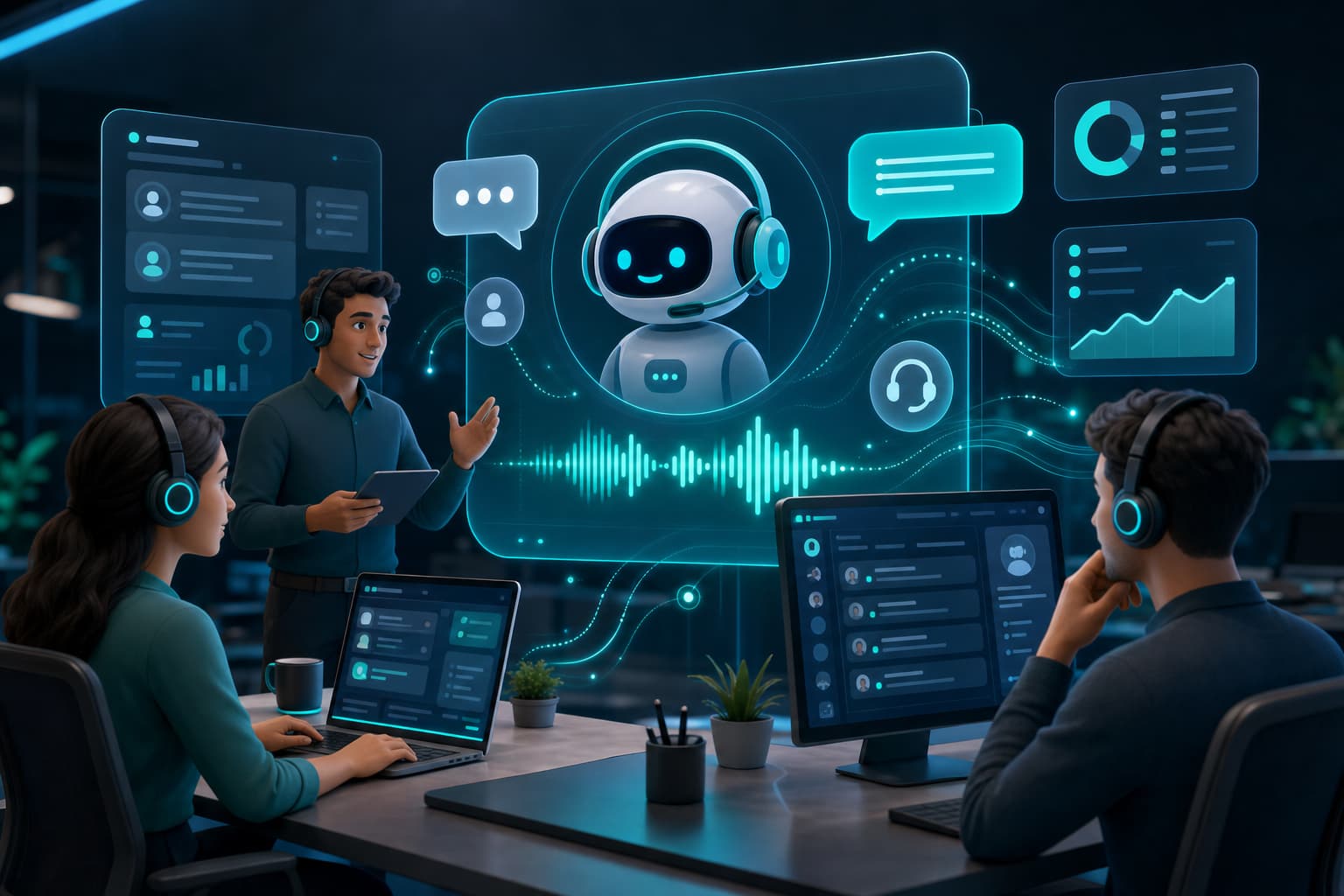
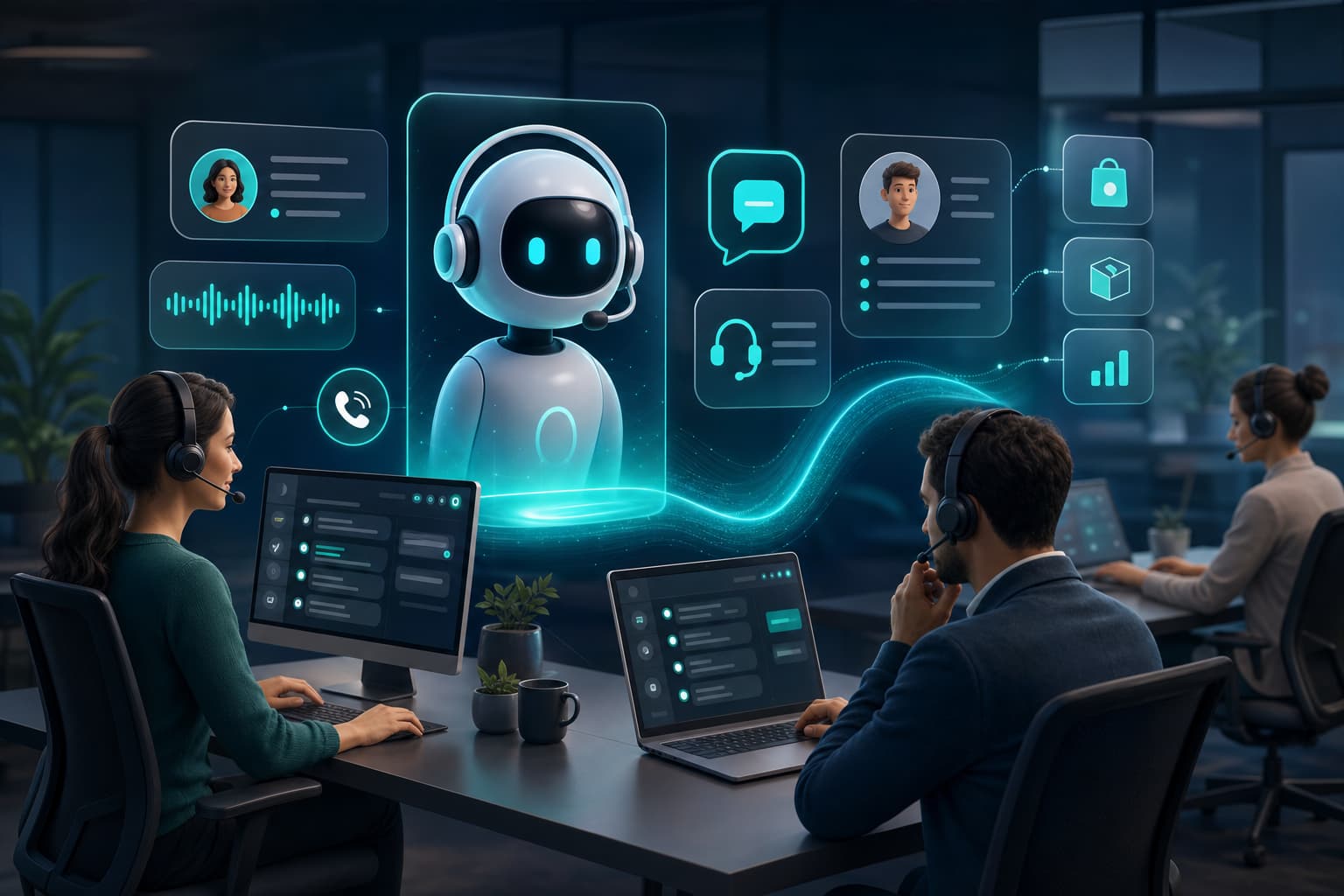
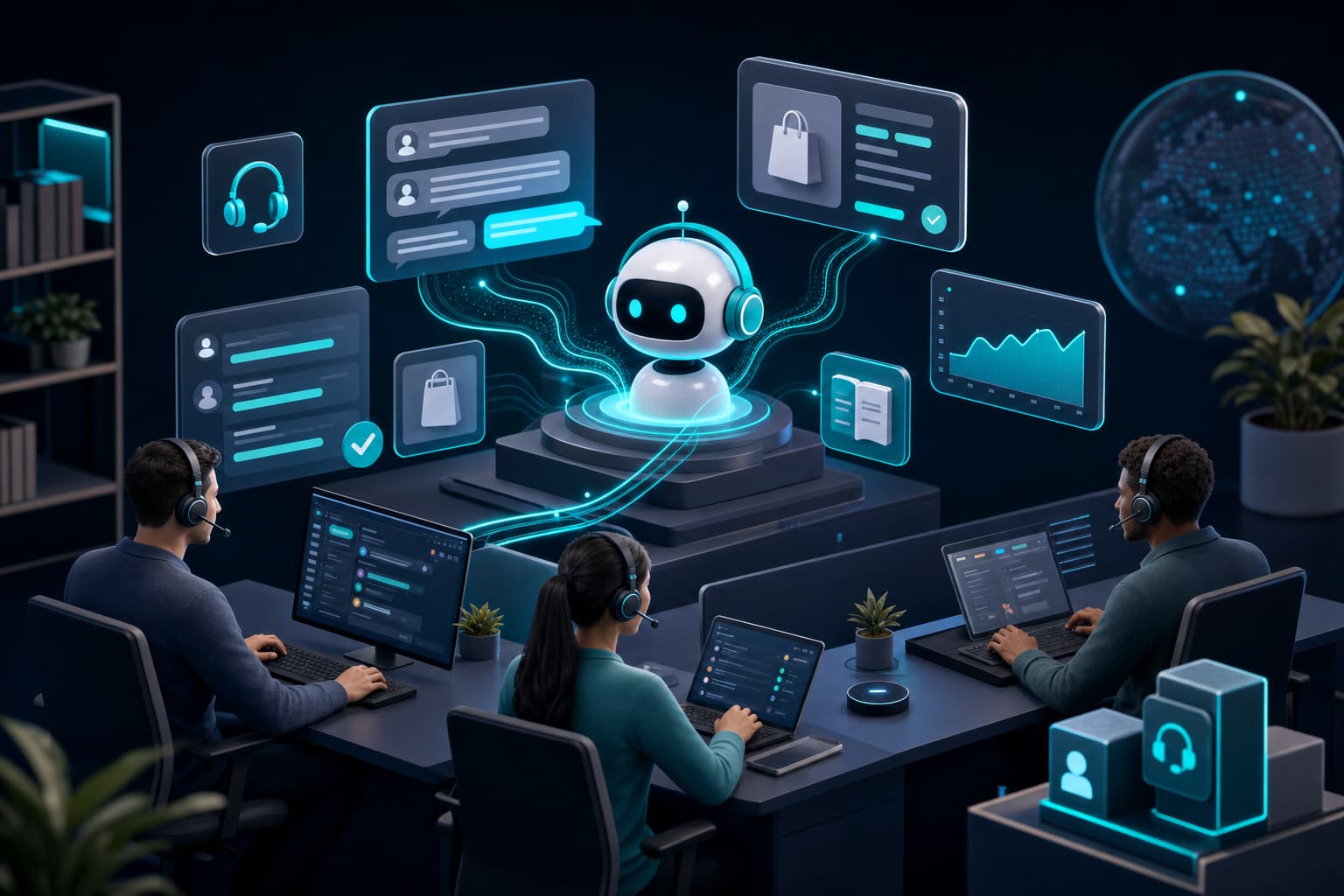
Companies in 2026 use AI customer support tools like chatbots, conversational AI platforms, knowledge base systems, ticketing automation, and semantic search solutions. These tools automate responses, route tickets intelligently, and reduce support costs. Leading solutions include Zendesk, Intercom, Freshdesk, and specialized platforms like KnowDesk that turn existing documentation into branded AI support widgets deployed in minutes without coding.
The Growing Demand for AI-Powered Customer Support Automation
Customer support has transformed dramatically over the past few years. Businesses now face unprecedented pressure to respond faster while managing higher ticket volumes with smaller teams. AI automation addresses this challenge directly by handling routine inquiries without human intervention.
In 2026, companies recognize that manual support processes drain resources and frustrate customers. Average response times matter more than ever. Implementing AI tools reduces resolution time significantly. Support teams shift focus to complex, high-value interactions where human judgment truly matters.
The investment in AI customer support automation continues growing. Organizations across industries—from e-commerce to SaaS to healthcare—deploy these solutions to stay competitive. The technology has matured beyond experimental phases into enterprise-standard infrastructure.
Popular AI Chatbot Platforms for Customer Support
Chatbots represent the most visible form of customer support automation. These conversational AI systems handle initial customer inquiries round-the-clock. They qualify questions, gather information, and escalate complex issues appropriately.
Major platforms dominating the market include Zendesk, Intercom, and Drift. However, each serves different business models and support philosophies. Zendesk focuses on large enterprises managing thousands of tickets daily. Intercom emphasizes seamless conversations across channels. Drift specializes in sales-driven support conversations.
Therefore, selecting the right chatbot requires understanding your support volume, customer demographics, and integration needs. Many companies deploy multiple tools simultaneously. For example, a SaaS company might use Zendesk for ticketing and Intercom for live chat integration.
Modern chatbots leverage large language models (LLMs) for natural conversations. They understand context better than earlier rule-based systems. They learn from interactions over time. This continuous improvement means resolution rates increase month over month.
Key Features of Leading Chatbot Solutions
- 24/7 availability across all time zones and holidays
- Multi-language support for global customer bases
- Seamless handoff to human agents when needed
- Integration with CRM systems and ticketing platforms
- Real-time sentiment analysis and escalation triggers
- Custom training on company-specific knowledge and policies
- Analytics dashboards showing resolution rates and satisfaction scores
Knowledge Base Systems and Semantic Search
Knowledge base systems form the backbone of intelligent customer support automation. These platforms organize company documentation, product guides, FAQs, and troubleshooting steps. AI systems search and retrieve relevant information instantly when customers ask questions.
In 2026, semantic search has largely replaced keyword-based lookup. Old systems required exact phrase matches to find answers. Modern semantic systems understand meaning, context, and intent. A customer asking "How do I update my profile?" receives the same results as someone typing "Where can I change my account details?"
Many companies struggle with fragmented documentation across tools. Therefore, unified knowledge platforms solve this critical problem. Tools like KnowDesk integrate Google Docs, Notion pages, PDFs, and Confluence documents into a single source of truth. This consolidation eliminates duplicate content and ensures information consistency.
As a result, support teams maintain documentation more efficiently. Customers get accurate, up-to-date answers immediately. The AI learns from your actual documentation rather than generic training data.
How Knowledge Base Systems Drive Support Efficiency
- Reduce support ticket volume by 30-50% through self-service options
- Enable AI systems to reference authoritative company information
- Decrease average handling time per ticket significantly
- Improve answer consistency across all support channels
- Create audit trails showing which documentation drives support inquiries
- Allow rapid updates when policies or procedures change
- Support multilingual documentation for international teams
Intelligent Ticketing and Routing Systems
Ticket management platforms have evolved from simple queue systems into intelligent routing engines. AI analyzes incoming tickets, extracts intent, classifies issues, and assigns them to the most qualified agent. This automation happens instantly without manual triage.
Freshdesk, Zendesk, and similar platforms incorporate machine learning for ticket categorization. The system learns from historical tickets and agent assignments. It recognizes patterns that humans might miss. Over time, routing accuracy improves dramatically.
However, routing intelligence extends beyond simple categorization. Modern systems predict ticket complexity and urgency. They estimate resolution time based on similar historical cases. This data helps managers allocate resources efficiently.
For example, a software company might route basic password reset tickets to junior support staff or directly to self-service systems. Complex architectural questions route to senior engineers. Billing disputes route to specialized finance teams. This distribution reduces resolution time and improves customer satisfaction.
Key Capabilities of Modern Ticketing Systems
| Capability | Benefit | Impact on Operations |
|---|---|---|
| Automatic Categorization | Issues sorted instantly by type | Reduces manual triage by 70% |
| Intelligent Routing | Tickets assigned to best-fit agents | Improves first contact resolution |
| Priority Scoring | Urgent issues surface automatically | Speeds critical customer issues |
| SLA Automation | Escalations triggered by time rules | Prevents deadline misses |
| Sentiment Analysis | System detects frustrated customers | Enables proactive intervention |
| Workload Balancing | Distributes tickets evenly across team | Prevents agent burnout |
AI-Powered Quality Assurance and Coaching
Quality assurance has traditionally consumed significant support team resources. Supervisors manually reviewed conversations, looking for training opportunities and compliance issues. AI has transformed this labor-intensive process into continuous, automated monitoring.
Modern QA systems analyze every conversation—live chats, emails, tickets, and calls. They score agent performance against company standards. They identify coaching opportunities in real-time. Rather than waiting for monthly reviews, agents receive immediate feedback.
Therefore, quality improves faster than traditional methods allow. Agents know exactly where they need development. Managers focus coaching sessions on specific behaviors rather than vague impressions.
As a result, training becomes targeted and measurable. Customer satisfaction scores correlate directly with agent development. Compliance issues surface immediately rather than during audits months later.
Omnichannel Support Automation
Customers today contact companies through multiple channels: email, chat, social media, phone, SMS, and messaging apps. Omnichannel support automation unifies all these conversations into single systems. AI handles routing and initial response consistently across every channel.
In 2026, customers expect seamless transitions between channels. They start conversations on chat and continue via email without repeating information. Omnichannel platforms maintain context across all interactions.
However, implementing true omnichannel support presents technical challenges. Data must sync across disparate systems. Agents need access to conversation history regardless of channel. AI must understand channel-specific etiquette and limitations.
Leading platforms now integrate social media monitoring, email management, live chat, and phone systems into unified dashboards. Agents see all customer history in one place. This visibility dramatically improves response quality.
Common Channels Unified in Modern Support Systems
- Email and ticketing for formal customer communication
- Live chat and messaging for real-time conversations
- Social media platforms for public customer inquiries
- SMS and WhatsApp for quick mobile-first communication
- Voice and video calls integrated with ticket systems
- In-app messaging for product-integrated support
- Community forums and peer-to-peer support channels
KnowDesk: Building AI Support From Your Existing Documentation
Traditional AI support solutions require extensive setup and customization. Companies spend months training systems on proprietary data. Maintenance becomes ongoing as documentation changes. The complexity makes AI support inaccessible for many organizations.
KnowDesk revolutionizes this approach by turning existing documentation directly into branded AI support widgets. No training data preparation needed. No complex integration processes. The system launches in minutes on any website.
In 2026, this innovation addresses a critical market need. Businesses already maintain documentation in Google Docs, Notion, PDFs, and Confluence. Why rebuild that content in specialized training databases? KnowDesk extracts knowledge from sources companies already use.
Therefore, implementation cost drops dramatically. Time to deployment shrinks from months to minutes. The AI stays current automatically when source documentation updates. The free trial lets teams experience the difference immediately without financial commitment.
For example, a growing SaaS company maintains product documentation in Notion and customer onboarding guides as Google Docs. With KnowDesk, these sources become an intelligent support widget. Customers access answers instantly. Support tickets decrease. Team capacity increases for complex issues.
The platform includes built-in analytics showing which documentation answers customer questions. This intelligence helps teams prioritize documentation improvements. Companies understand support bottlenecks quickly.
Why KnowDesk Stands Out in 2026
- Integrates Google Docs, Notion, PDFs, and Confluence seamlessly
- Deploys branded widgets on any website without coding
- Updates automatically when source documentation changes
- Provides analytics on customer interactions and questions
- Requires no AI expertise or technical setup
- Maintains customer data security and privacy
- Offers flexible KnowDesk pricing for businesses of all sizes
Companies considering customer support automation should explore KnowDesk's unique approach. The documentation provides detailed setup instructions. The platform includes a Shopify app for e-commerce businesses. Teams can start a free trial instantly.
Measuring ROI and Success Metrics for AI Support Automation
Implementing AI customer support automation requires upfront investment. Smart companies measure results carefully to justify costs and optimize deployment. Key metrics reveal whether automation actually improves customer outcomes.
First Contact Resolution (FCR) rates indicate whether customers get answers without escalation. Higher FCR reduces follow-up interactions and improves satisfaction. AI systems should increase FCR by 20-40% depending on use case.
Average Response Time (ART) shows speed improvement. Customers expect sub-minute responses in 2026. AI automation achieves this consistently across all channels and time zones. Manual support teams cannot match this speed.
Customer Satisfaction Scores (CSAT) and Net Promoter Score (NPS) measure the customer experience impact. Well-implemented AI automation typically increases these metrics by 5-15 points. Poor implementation may hurt scores, emphasizing importance of proper configuration.
Cost per ticket decreases when AI handles volume. Automation can reduce costs by 30-60% depending on ticket complexity distribution. However, companies should account for setup, training, and maintenance costs when calculating true ROI.
Agent satisfaction improves when automation removes repetitive tasks. Support teams focus on meaningful interactions. Employee turnover often decreases. Retained expertise compounds over time.
Choosing the Right AI Customer Support Tool for Your Business
The market offers numerous AI customer support solutions, each with different strengths and limitations. Selection depends on company size, budget, technical capability, and specific support challenges.
Enterprise companies with massive support volumes benefit from comprehensive platforms like Zendesk or Freshdesk. These systems handle thousands of tickets daily. They scale indefinitely. The cost justifies for large organizations.
However, smaller companies and startups often overpay for enterprise features they never use. KnowDesk offers a better fit for many organizations. The platform focuses on rapid deployment and straightforward functionality. Pricing scales with actual usage rather than seat counts.
Therefore, evaluate solutions based on your current needs rather than hypothetical future scenarios. A simple question to ask: How quickly can this tool go live? Enterprise platforms require months. KnowDesk launches in minutes.
As a result, companies gain competitive advantage faster. They learn whether AI support works for their customers immediately. If needed, they upgrade to more complex platforms with confidence they understand their needs.
For companies already comfortable with Zendesk or Freshdesk, these platforms work well. Their AI capabilities have matured significantly in recent years. Integration with existing systems is seamless.
For companies seeking rapid deployment and cost efficiency, modern alternatives like KnowDesk deserve consideration. The see pricing page shows transparent costs. No surprise fees. No mandatory enterprise packages.
Future Trends in AI Customer Support Automation for 2026 and Beyond
The AI customer support landscape continues evolving rapidly. Several trends dominate in 2026 and will shape the coming years.
First, AI systems increasingly handle complex issues that previously required human experts. Multimodal AI processes text, images, videos, and audio simultaneously. Customers can show problems visually rather than describe them verbally. Resolution time decreases significantly.
Second, proactive support powered by AI analytics predicts customer issues before they occur. Rather than waiting for complaints, companies identify struggling users and offer help immediately. This shift from reactive to proactive support dramatically improves customer lifetime value.
Third, personalization reaches new sophistication. AI systems consider customer history, preferences, behavior patterns, and context to customize every interaction. Generic responses disappear. Each customer receives individualized support.
Fourth, integration with voice and video becomes standard. Text-based chat represents just one interface. Customers increasingly prefer voice and video interactions. AI systems handle these modalities as naturally as written communication.
Fifth, security and privacy become paramount differentiators. Regulations tighten regarding customer data handling. Companies demand AI solutions that meet stringent compliance requirements. This trend benefits platforms that prioritize security from inception rather than retrofitting it later.
Sixth, composable AI architecture gains adoption. Rather than monolithic platforms, companies assemble best-of-breed components. They mix and match AI services from different providers. This flexibility ensures companies always use optimal tools for each specific need.
Common Challenges and How to Overcome Them
Implementing AI customer support automation presents real challenges that smart companies anticipate and address proactively.
First challenge: outdated or incomplete documentation. AI systems can only leverage information available to them. If your knowledge base contains errors or gaps, the AI propagates those problems. Solution: audit and clean documentation before implementation. Maintain discipline about updates thereafter.
Second challenge: unrealistic customer expectations about AI capabilities. Customers frustrated by chatbot limitations leave negative reviews. Solution: set clear boundaries about what automation handles. Provide easy escalation to humans for complex issues. Use transparency to build trust.
Third challenge: agent resistance and skill degradation. Support teams sometimes fear automation threatens their jobs. As agents handle only complex issues, their skills may atrophy in routine areas. Solution: position AI as liberating agents from tedious tasks. Invest in training for higher-value work.
Fourth challenge: poor integration with existing systems. Disconnected platforms create data silos. Customers receive inconsistent information across channels. Solution: prioritize integration capabilities during vendor evaluation. Ensure seamless data flow between systems.
Fifth challenge: continuous improvement and maintenance. AI systems degrade if not actively improved. Documentation changes. Customer expectations evolve. Solution: build monitoring and refinement into your implementation plan. Allocate resources for ongoing optimization.
Sixth challenge: balancing automation and human touch. Over-automation frustrates customers. Under-automation wastes the technology investment. Solution: analyze your customer base carefully. Some segments prefer self-service. Others value human interaction. Optimize the mix for your specific customers.
These challenges are manageable. Companies that address them systematically gain significant competitive advantage.
Implementing Your AI Customer Support Strategy in 2026
Having reviewed the landscape, how should companies approach AI customer support implementation? Start with assessment. Evaluate current pain points, ticket volumes, customer satisfaction, and team capacity.
Next, set realistic goals. Define specific metrics you'll measure: FCR improvement, response time reduction, cost per ticket decrease, satisfaction increase. These baselines let you track progress objectively.
Then, choose your platform strategically. Consider implementation speed, cost, technical requirements, and learning curve. For companies needing rapid deployment, start a free trial with modern solutions. For those with extensive existing infrastructure, evaluate whether to integrate with current systems.
Implement in phases. Start with highest-volume, lowest-complexity inquiries. Prove value quickly. Expand scope gradually. This approach minimizes risk and builds organizational confidence.
Train your team thoroughly. Even the best AI systems require human guidance and monitoring. Support agents need to understand how AI works, its limitations, and how to optimize it. Invest in training upfront.
Monitor results continuously. Most platforms provide analytics dashboards showing performance metrics. Track against your established baselines. Make adjustments quickly when data suggests changes needed.
Gather customer feedback actively. Not all metrics capture customer sentiment. Surveys and direct feedback reveal issues that data might miss. Use qualitative feedback to guide improvements.
Finally, stay current with platform updates. AI technology evolves rapidly. Your platform provider regularly adds capabilities. Understanding new features ensures you benefit from innovation your provider develops.
Conclusion: The Necessity of AI in Modern Customer Support
In 2026, AI customer support automation has progressed from experimental technology to business-critical infrastructure. Companies that have not yet implemented some form of AI automation face competitive disadvantage. Customers expect instant responses. Costs demand efficiency. Complexity requires intelligence.
The good news: implementing AI support has become remarkably accessible. Solutions exist for every company size and budget. Implementation timelines have shortened from months to days or hours. The technology works. Thousands of companies prove this daily.
Whether you choose comprehensive enterprise platforms, specialized solutions like KnowDesk, or composable combinations of best-of-breed tools, the fundamental principle remains: let AI handle what AI handles best, and reserve human attention for what truly requires human judgment and empathy.
The companies winning in customer support are those that have thoughtfully integrated AI into their strategies. They automate routine inquiries, route intelligently, maintain knowledge systematically, and support their teams with AI-powered tools. They achieve better customer outcomes at lower costs while their support teams do more meaningful work.
Starting your AI customer support journey is simpler than you think. Assess your current challenges. Define your goals. Evaluate options including the free trial options available today. Implement thoughtfully. Measure results. Improve continuously. The competitive advantage awaits those who act now in 2026.