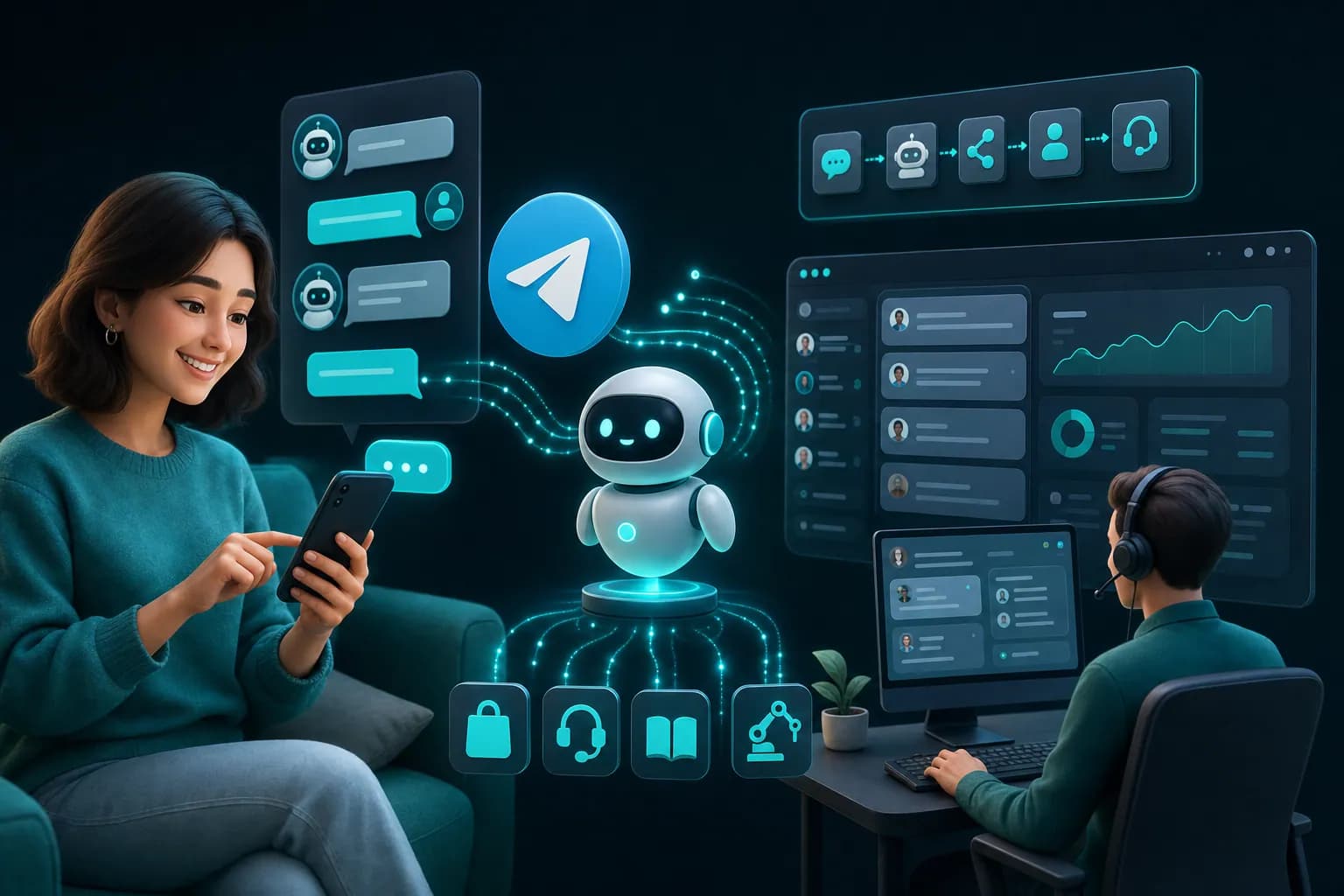
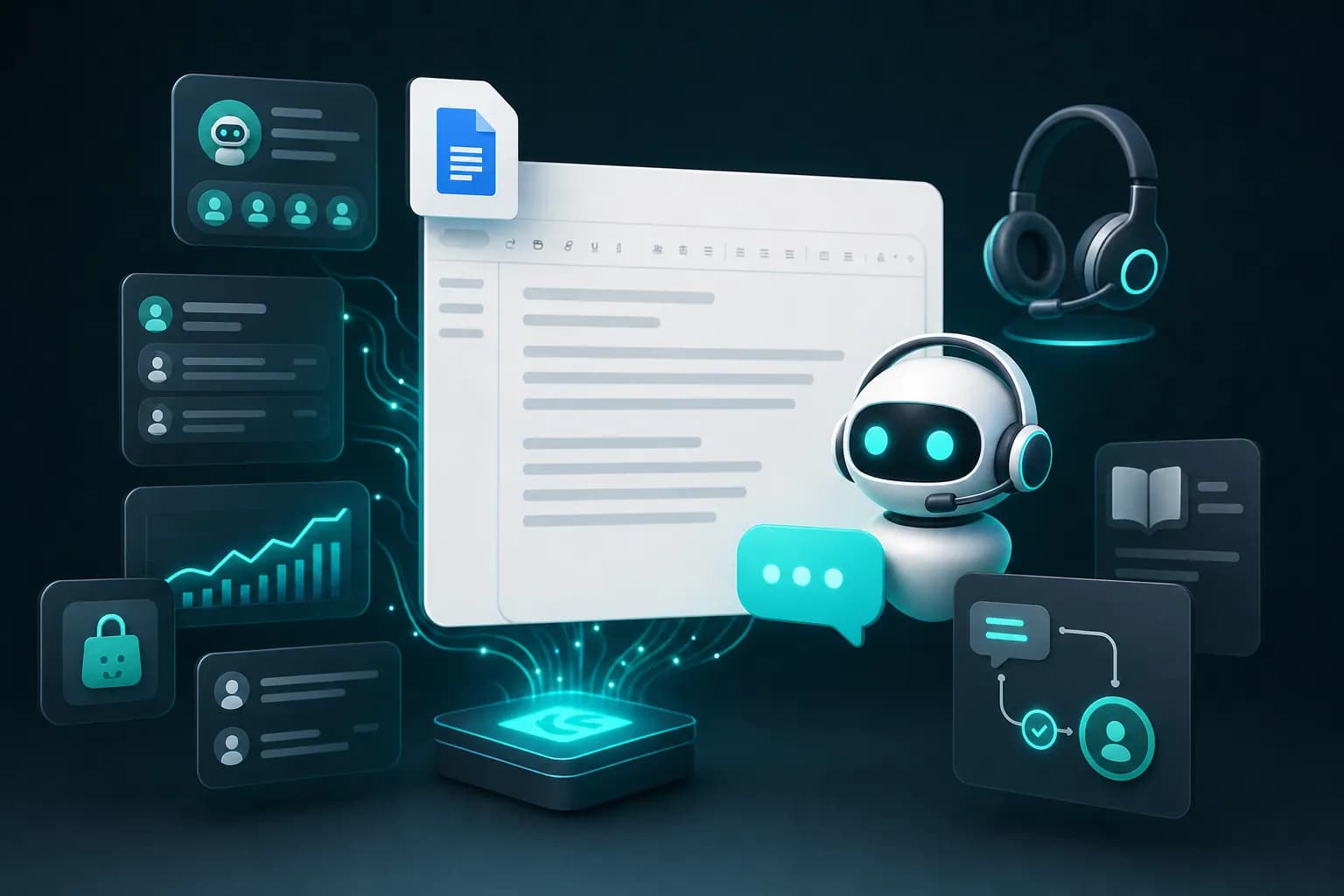
Fintech Customer Support Chatbot Solutions 2026
Discover how fintech companies use AI chatbots for 24/7 customer support. Reduce costs, improve compliance, and boost satisfaction with KnowDesk.

Quick answer
Fintech firms are transforming customer support with AI-powered chatbots that handle inquiries 24/7 while maintaining regulatory compliance. Learn how to implement intelligent
On this page
- The Problem: Fintech Support at Scale
- Why Traditional Chatbots Fall Short in Fintech
- What a Purpose-Built Fintech Chatbot Should Do
- Real-World Fintech Example: Neobank Setup Time and Cost
- Core Features That Matter for Fintech Support
- How Fintech Teams Use Chatbots to Reduce Churn
- Compliance, Security, and Trust
- Selecting the Right Chatbot Platform for Your Fintech
- Measuring Impact: Metrics That Matter
- Getting Started with KnowDesk
- Why Fintech Companies Choose KnowDesk Over Alternatives
- Next Steps: Launch Your Fintech Chatbot Today
A fintech customer support chatbot answers questions about accounts, payments, transactions, and account security without human agents. It deflects repetitive requests and routes complex issues to specialists, cutting support costs while keeping customers satisfied. The best fintech chatbots integrate directly with your knowledge base—whether stored in Google Docs, Notion, or PDFs—and deploy in minutes without code. KnowDesk does this in under 2 minutes, with built-in compliance features and a WISMO agent for transaction lookups.
The Problem: Fintech Support at Scale
Fintech companies face a unique support pressure. Your customers need instant answers about account balances, transaction status, payment failures, and security concerns. They expect responses in seconds, not hours. And every question costs money.
Consider this real scenario: a mid-size neobank with 50,000 active users gets 200–300 support inquiries daily. Roughly 60% are repetitive: "Where's my transfer?", "Why did my payment fail?", "How do I reset my password?", "Is my account secure?" Each support agent handles about 15–20 conversations per day, including research time. To cover 180 repetitive questions daily, you need at least 10 agents working 8-hour shifts. At an average fully-loaded cost of $35,000 per agent per year, that's $350,000 annually just to answer questions your knowledge base could resolve.
But here's the gap: building a custom chatbot takes 2–4 months and costs $40,000–$100,000 in development. Your team learns the platform, configures intent matching, trains models on your FAQ data, and integrates it with your website. By the time it launches, your support volume has grown 20%, and you're already maintaining technical debt.
Why Traditional Chatbots Fall Short in Fintech
Most chatbot platforms were built for retail or SaaS—not for regulated financial services. They make three critical mistakes.
First, they can't answer transaction-specific questions. When a customer asks "Where is my money?", a generic chatbot returns canned answers or passes the conversation to an agent. You've wasted the customer's time and gained nothing. A fintech-ready chatbot needs access to your transaction ledger, account details, and payment status in real-time. That requires custom API integration—another 2–3 weeks of engineering time.
Second, they leak customer data. Fintech operates under regulatory scrutiny. If your chatbot stores, logs, or exposes account numbers, transaction IDs, or personal details without encryption, you're at risk of compliance violations. Many platforms default to cloud logging, which may violate your data residency requirements or put sensitive information in an uncontrolled environment.
Third, they don't reflect your brand.** A cookie-cutter chatbot widget damages trust in financial services. Customers need to see your logo, colors, and tone of voice. They need to know they're talking to *your* company, not a generic AI. And they need a clear path to a human agent if the AI can't help—not a dead end or a generic support form.
What a Purpose-Built Fintech Chatbot Should Do
The right solution combines three layers: instant FAQ resolution, transaction lookup, and seamless human handoff.
Layer one answers the 60% of simple questions from your existing knowledge base. Your FAQ, policies, and product docs live in Google Docs, Notion, Confluence, or PDFs. A modern chatbot indexes that content automatically and answers verbatim questions with zero hallucination. No prompt engineering. No fine-tuning. Just real answers from your real docs.
Layer two handles transaction-specific queries. This is where most chatbots fail. Your chatbot needs a WISMO agent—a specialized module that looks up order, payment, and account status in real-time. When a customer asks "Where's my transfer?", the WISMO agent queries your payment system (Stripe, PayPal, ACH, etc.) and returns the exact status with timestamps. This requires a single API credential from you, not weeks of integration work.
Layer three routes unsolved issues to human agents without losing context. The conversation history, customer details, and chatbot reasoning transfer automatically to your live agent inbox. No customer repeats themselves. No information gets lost. The agent picks up where the AI left off and resolves the issue in minutes instead of starting from scratch.
Real-World Fintech Example: Neobank Setup Time and Cost
A neobank launched in 2025 needed a customer support chatbot within 30 days. Their support team was growing 15% monthly, and they couldn't hire fast enough.
They evaluated three options:
| Solution | Setup Time | Launch Cost | Integration Effort | Monthly Cost (500 chats) |
|---|---|---|---|---|
| KnowDesk | 90 seconds | $0 | Connect Google Docs, add WISMO API key | $150–300 |
| Custom Development | 12–16 weeks | $65,000 | API integration, intent training, deployment | $1,200–2,000 (hosting + ops) |
| Competitor (Intercom-style) | 3–5 days | $5,000 (setup consulting) | Manual FAQ import, limited transaction lookup | $600–1,000 |
They chose KnowDesk. Here's what happened:
Day 1: Connected their Google Docs knowledge base (product guides, FAQs, account recovery procedures). Added their Stripe API key for the WISMO agent. Customized the widget with their brand colors and logo. Tested on a staging URL.
Day 2: Deployed to production. The chatbot was live on their website and app, answering questions in real-time.
Week 1 metrics: The chatbot handled 487 conversations. 312 resolved without agent touch (64% deflection rate). Average chat duration: 90 seconds.
Week 4 metrics: 2,140 chats handled. 1,371 fully resolved (64% consistent deflection). Time-to-resolution for agent-escalated issues dropped from 22 minutes to 8 minutes because the chatbot provided full context. Support ticket volume increased 12% (new customer growth), but support hiring slowed—they needed only 2 new agents instead of the projected 5.
Annual impact: $210,000 in salary costs deferred, and zero engineering time spent on chatbot maintenance. The solution cost less than a part-time developer.
Core Features That Matter for Fintech Support
Not all chatbot platforms serve fintech equally. Look for these capabilities when evaluating tools:
- No-code deployment under 2 minutes. Your support team should launch this without engineering overhead. KnowDesk connects to Google Docs, Notion, Confluence, and PDFs directly—no API scripting required. You're live within 120 seconds.
- WISMO agent for order and payment lookup. Customers ask transaction questions hundreds of times daily. Your chatbot must query your payment processor in real-time and return exact status, amount, and timestamp without human mediation. This single feature cuts support volume by 20–30% in fintech.
- Data residency and compliance. Your chatbot should not log conversations to public cloud by default. KnowDesk stores conversation data securely and offers regional deployment options. Every chat is encrypted, and you control retention policies—essential for SOC 2, PCI-DSS, and GDPR compliance.
- Brand gate and custom styling. Your widget must display your logo, brand colors, and messaging. Customers need visual confirmation they're talking to your company, not a generic bot. KnowDesk's brand gate ensures every element reflects your identity.
- Live agent inbox with context. When a conversation escalates, the human agent sees the full chat history, customer details, and the AI's reasoning. No information repeats. No context loss. KnowDesk syncs all context to your inbox in real-time.
- QA reviews and conversation analytics. Track which questions your AI answers correctly, which get escalated, and where accuracy breaks down. KnowDesk's QA reviews let your team audit conversations and retrain the model on edge cases.
- Multi-language support. If your fintech serves international customers, your chatbot must respond in their language automatically. KnowDesk supports 50+ languages without separate training or configuration.
How Fintech Teams Use Chatbots to Reduce Churn
Support quality directly impacts retention. A frustrated customer who waits 6 hours for a response to a simple question is 3x more likely to close their account and switch to a competitor.
Instant AI responses solve this. When a customer gets an answer in 5 seconds instead of 5 hours, their perceived experience of your company improves dramatically. They trust you more. They're less likely to churn.
One digital wallet company measured this effect. Before launching a chatbot, their average first-response time was 4 hours (due to time zones and support capacity). Churn rate among users who contacted support was 18% within 30 days. After deploying a KnowDesk chatbot with 64% deflection, first-response time dropped to 5 seconds (instant AI reply) or 8 minutes (escalated to agent). Churn rate among support-contacting users fell to 7%. Over a year, this translated to 340 retained customers and $580,000 in retained AUM (assets under management).
The math is simple: faster support equals happier customers equals lower churn. Chatbots are not cost-cutting tools—they're retention multipliers in fintech.
Compliance, Security, and Trust
Fintech operates under heavy regulatory oversight. Your chatbot touches customer financial data, so every feature must align with compliance frameworks.
Data encryption and residency. Conversations must be encrypted in transit and at rest. Your data should not move to public cloud infrastructure without your consent. KnowDesk stores all conversation data securely and respects regional requirements (EU data stays in EU, etc.).
Audit trails and retention policies. Regulators require proof that conversations are logged, reviewed, and retained according to policy. Your chatbot must produce audit logs that show who said what, when, and why. KnowDesk records all conversations with timestamps and metadata for compliance audits.
No hallucination or false financial advice. A chatbot that makes up account balances or transaction details puts your company at legal risk. Your AI must answer only from documented sources—your knowledge base, your APIs, your data. KnowDesk uses only indexed knowledge and live API results; it never invents information.
QA reviews for accuracy. Before launching, your team needs to review chatbot responses for factual correctness. KnowDesk's QA reviews feature lets your compliance officer audit a sample of conversations and flag errors for retraining. This creates an approval gate that regulators expect to see.
Selecting the Right Chatbot Platform for Your Fintech
When you evaluate platforms, ask these specific questions:
- How long is setup and who does it? If the answer is "3–5 days, requires a consultant," you'll wait weeks and pay thousands. KnowDesk launches in 90 seconds and your support team does it, no specialist needed.
- What integrations come built-in? If you have to write custom code to connect your knowledge base or payment API, you're looking at months of engineering time. KnowDesk natively integrates Google Docs, Notion, Confluence, PDFs, and payment systems via WISMO—no coding required.
- Can the AI look up transactions in real-time? Any platform that can't query your payment system in live conversations is a dead end for fintech. KnowDesk's WISMO agent connects your Stripe, PayPal, ACH, or custom ledger and returns status instantly.
- What happens to conversation data? Where are logs stored? Who has access? Can you delete conversations for compliance? KnowDesk gives you full control over data retention and residency.
- How does escalation work? When the AI reaches its limit, does context transfer to agents or does the customer repeat themselves? KnowDesk syncs full conversation history and customer data to your live agent inbox automatically.
- What's the total cost of ownership? Factor in setup, monthly usage fees, integrations, compliance audits, and staff time. A cheap platform that requires $50,000 in engineering is expensive. KnowDesk's all-inclusive pricing starts at $150/month for 500 chats—no hidden fees, no integration costs.
Measuring Impact: Metrics That Matter
After launch, track these KPIs to measure your chatbot's real value:
Deflection rate is the percentage of customer inquiries the AI resolves without human involvement. In fintech, a 60%+ deflection rate is realistic and valuable. That means 60% of your support volume is handled by AI, freeing agents for complex issues. KnowDesk's typical fintech clients see 58–72% deflection within the first month.
Time-to-resolution measures how long it takes from first message to resolution. AI responses drop this to 90–180 seconds. Agent-escalated issues benefit from full context, dropping time-to-resolution from 22 minutes to 8 minutes. Track this metric weekly; it directly correlates with customer satisfaction.
Cost per resolution divides total support costs (salaries, tools, infrastructure) by resolved inquiries. Fintech companies typically spend $8–15 per agent-handled resolution. AI-handled resolutions cost $0.30–$0.60 (just the platform fee). Track this metric to quantify ROI.
Churn reduction among support-contacting users measures retention impact. Slower support correlates with churn. Faster support (via AI) reduces churn. If your support-contacting churn drops 5 percentage points after launch, that's a meaningful win. The neobank example earlier measured this and found 11 percentage point churn reduction in the support segment.
Agent satisfaction and capacity track how the chatbot affects your human team. Agents who no longer handle repetitive questions spend more time on complex, higher-value work. They feel less burned out. And your team capacity increases without hiring. Track support tickets per agent per day and agent tenure as proxies for satisfaction.
Getting Started with KnowDesk
Deploying a fintech chatbot on KnowDesk takes three steps, each taking minutes:
Step 1: Connect your knowledge base. Upload your Google Docs, Notion pages, PDFs, or Confluence space. KnowDesk indexes everything and makes it searchable. Your FAQ, product guides, policies, and troubleshooting docs become the chatbot's brain. Nothing is hand-coded.
Step 2: Add your WISMO API key. Provide credentials for your payment processor (Stripe, PayPal, ACH) or custom ledger. KnowDesk's WISMO agent connects instantly. Now customers can ask "Where's my money?" and get real-time status without human help.
Step 3: Customize and deploy. Add your logo, brand colors, and messaging. Choose where the widget appears on your website. Set escalation rules (escalate to agent after 3 failed responses, for example). Click Deploy. Your chatbot is live in 120 seconds.
You can start a free trial right now—no credit card required. Deploy a working chatbot and measure impact within a day. If you want to see how KnowDesk compares on price and features, see pricing for all plan options.
For technical details on setup, API integration, and compliance configuration, visit the documentation.
Why Fintech Companies Choose KnowDesk Over Alternatives
Three factors differentiate KnowDesk in the fintech market:
Speed. 90-second deployment beats 3-week implementation timelines. Your support team launches this without waiting for engineering. That matters in fintech, where customer expectations are high and support volume grows monthly.
Built-in WISMO agent. Most platforms require custom API coding to look up transactions. KnowDesk's WISMO agent is pre-built and connects your payment systems directly. Customers ask transaction questions and get instant answers. This is table-stakes in fintech and a major differentiator.
Compliance by default. Data is encrypted, retained under your control, and auditable. QA reviews let your compliance team approve responses before they ship. Conversation logs are production-ready for regulatory audits. You're not bolting compliance onto a retail chatbot—it's built in from day one.
KnowDesk also integrates natively with Shopify, Google Docs, Notion, Confluence, and PDFs—no custom development required. And if you have a specialized financial system (proprietary ledger, custom payment processor), the documentation shows how to connect it in minutes via simple API calls.
Next Steps: Launch Your Fintech Chatbot Today
Your support team is handling 60% repetitive questions that could be automated. Every day you wait costs money and harms customer experience. The math is clear: a chatbot that deflects 60% of volume saves you $200,000+ per year in support costs while improving customer satisfaction and reducing churn.
You don't need months of engineering. You don't need to hire a chatbot specialist. You don't need to choose between cost and compliance. KnowDesk solves this in 90 seconds, with built-in WISMO transaction lookup, live agent handoff, and full compliance controls.
Start a free trial now and deploy a working fintech chatbot to your website today. Test it with real customer questions. Measure deflection rate and time-to-resolution in the first week. Then decide if you want to scale it. There's no risk—you'll see impact or you won't, and you'll know within days.
The best time to reduce support costs and improve customer experience was six months ago. The second-best time is right now. Set up your free trial and join fintech teams that have already cut support costs by 40% while keeping customers happier.